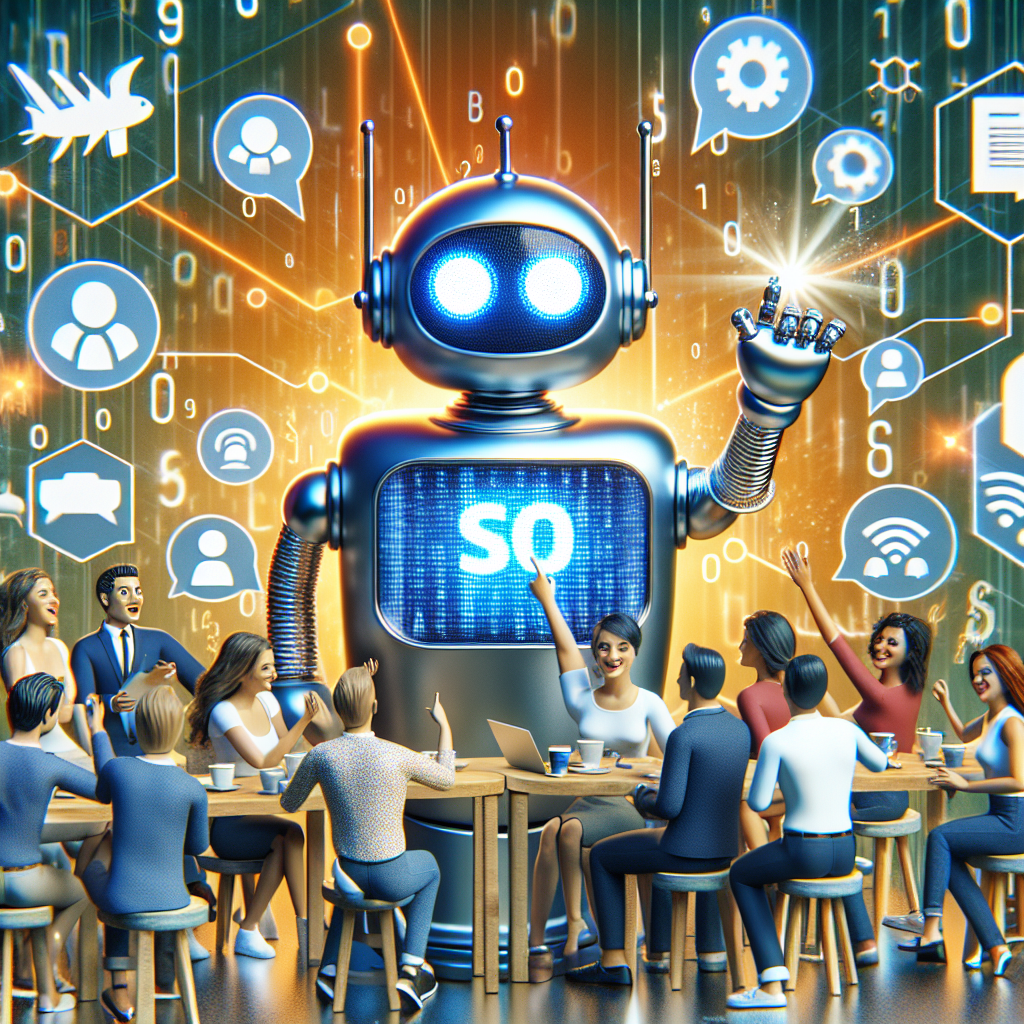
Brands are no longer content with just attracting traffic: they must now chat in real time with their visitorsThis evolution profoundly transforms the way companies conceive their online presence. Automated assistants, once limited to basic responses, are becoming powerful levers for capturing attention, guiding internet users, and improving search engine visibility.
By combining optimization for search engines and dynamic interactions, businesses create smoother journeys that can meet the expectations of a demanding audience. This convergence between visibility and interaction is redefining the rules of digital marketing.
When search engines meet automated dialogue
Search engines now favor content that can precisely answer users' intentions. In this context, conversational interfaces play a key role. They allow for offering contextualized answers and guiding the user through their navigation.
A well-designed virtual assistant can analyze questions asked, suggest relevant content, and guide users to the most suitable pages. This functionality promotes a better understanding of expectations and helps to reduce friction in the digital journey.
To further explore the impact of these technologies on online visibility, consult the evolution of SEO in the face of artificial intelligence.
An interaction that transforms navigation
Instant and relevant answers
Internet users today expect immediate answers. Conversational systems allow for processing requests in seconds, without human intervention. This considerably improves overall satisfaction and encourages visitors to stay longer on the site.
This responsiveness also influences the signals taken into account by search engines, such as time spent on a page or bounce rate. Smooth interaction then becomes a strategic asset for positioning.
Increased personalization of exchanges
Thanks to behavioral analysis, these tools can adapt their responses based on each visitor's profile. They thus participate in creating a tailored journey, strengthening engagement and conversion.
This adaptability relies not only on predefined scripts but on models capable of learning and evolving. The result: more natural and effective communication.
A question about this article?
Contact usSEO and virtual assistants: a strategic synergy
The integration of these technologies into a digital strategy is not limited to improving customer service. It also contributes to structuring information more relevantly, facilitating its indexing by search engines.
By leveraging data from interactions, it becomes possible to identify frequent questions, emerging needs, and points of friction. This information allows for content optimization and better meeting audience expectations.
Innovative solutions, such as those based on a logic of exchanges between automated systems, allow us to go even further. For example, discover an advanced approach to communication between digital agents, which improves the understanding of content by indexing robots.
Automation for performance
The integration of advanced technologies allows for managing a large volume of requests without compromising the quality of responses. This ability to simultaneously process multiple interactions represents a major advantage for companies.
It also offers the possibility of collecting valuable data on visitor behavior. This information can then be used to refine the digital strategy and improve overall performance.
- Time saving for teams
- Improving customer satisfaction
- Content optimization through collected data
- Conversion increase
In parallel, automated analysis allows for the rapid detection of areas for improvement. To learn more about this, consult the use of artificial intelligence to analyze your SEO.
Best practices for successful integration
Setting up an effective conversational interface is not something that can be improvised. It is essential to design coherent scenarios and anticipate user needs.
- Define objectives – assistance, conversion, information
- Identify frequently asked questions from visitors
- Structure the answers clearly
- Analyze interactions to continuously improve
Another crucial point is to maintain a balance between automation and human intervention. Even the most advanced systems must be able to redirect to an advisor in case of specific needs.
Towards enhanced customer relationships
The integration of these technologies marks a major evolution in the relationship between brands and their audiences. By combining visibility and interaction, companies can create more engaging experiences and more effective ones.
This transformation is not limited to the technical aspect. It also involves a new way of conceiving content, prioritizing clarity, relevance, and accessibility.
Organizations that succeed in this transition are those that manage to align their marketing objectives with the real expectations of users. They leverage data, adapt their messaging, and use available tools to offer a consistent and high-performing experience.
As technologies evolve, the line between visibility and interaction continues to blur. Companies that can leverage this convergence will have a sustainable competitive advantage, offering increasingly fluid and audience-tailored journeys.