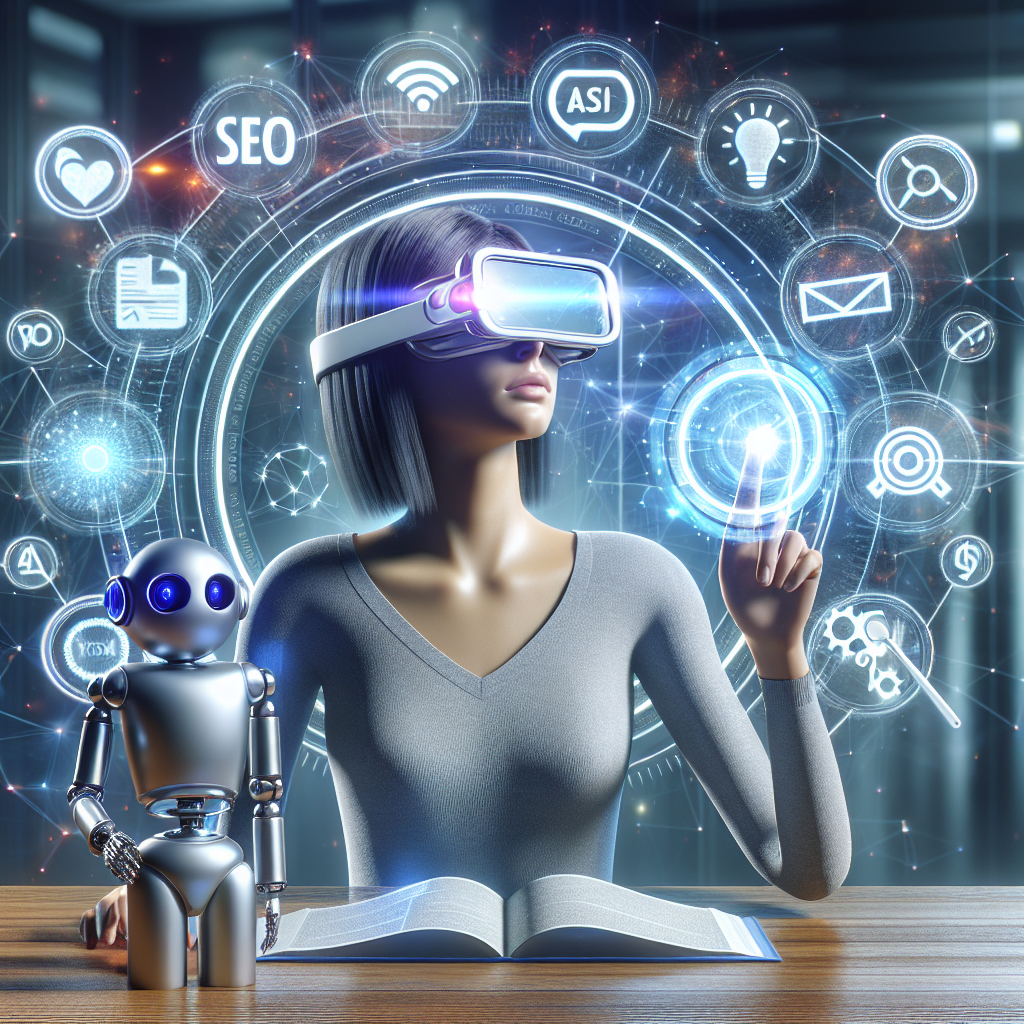
The evolution of the web is no longer limited to classic pages and flat screens. A new layer of interaction is developing, where digital content integrates directly into the physical environment. In this context, SEO strategies must adapt to unprecedented visual and interactive experiences. Artificial intelligence plays a decisive role here, by facilitating data interpretation and understanding user intentions.
This transformation forces digital marketing professionals to rethink their methods. It is no longer just about optimizing text, but about structuring complete experiences that can be understood by increasingly advanced algorithms. Search engine positioning is evolving towards a more contextual and sensory logic, where relevance far exceeds traditional keywords.
A new dimension for natural referencing
The integration of digital elements into the real world is disrupting the usual SEO benchmarks. Content is no longer solely viewed on a screen but is integrated into enriched user journeys. A brand's visibility now depends on its ability to exist in these hybrid environments.
Search engines are also evolving to analyze these new forms of content. They must understand images, objects, and real-time interactions. This implies a profound transformation of ranking criteria. Semantic analysis is becoming more complex, combining visual, contextual, and behavioral data.
In this context, data structuring becomes critically important. Tags, metadata, and descriptions must be designed to be interpreted by intelligent systems capable of reconstructing complete experiences.
The central role of artificial intelligence
Artificial intelligence acts as an engine of adaptation to these new uses. It allows for the analysis of massive volumes of data and the identification of patterns invisible to the human eye. Algorithms become capable of understanding the intention behind a complex interaction, and no longer just a textual request.
This capability paves the way for more refined strategies. For example, it becomes possible to anticipate user needs based on their environment or behavior. Content can thus be adjusted in real-time to offer a more relevant experience.
Specialized solutions already leverage this dynamic, as shown by the impact of AI on natural SEO. These approaches allow for the automation of certain optimizations while improving the overall quality of the content offered.
A question about this article?
Contact usInteractive experiences at the heart of strategies
Classic formats are gradually giving way to more engaging experiences. Users are no longer content to just read or watch: they interact, explore, and experiment. Content becomes a dynamic space where every interaction counts.
This evolution requires rethinking content creation. It's no longer just about producing articles, but about designing complete experiences, integrating visuals, interaction, and storytelling. The perceived quality depends as much on the experience as on the information itself.
For search engines, this means analyzing more complex signals: interaction time, engagement, user journey. These indicators are becoming essential for determining content relevance.
The key elements to optimize
- Content contextualization to adapt to the user environment
- Data structuring to facilitate interpretation by algorithms
- User experience as a central performance criterion
- Real-time interaction to strengthen engagement
The Bot-to-Bot Approach: A Tailored Response
Faced with this growing complexity, some solutions adopt an innovative approach. This is the case with direct communication between automated systems, which optimizes dialogue with search engines. This method aims to improve the understanding of content by indexing robots.
Platforms like BotLink leverage this logic to enhance website visibility. Their technology relies on optimized interaction with algorithms, thus facilitating positioning. To better understand this approach, consult this detailed presentation of the Bot To Bot concept.
This strategy fits perfectly into an environment where machines play a central role. Optimization is no longer limited to human users, but is also directly aimed at automated systems.
Towards a redefinition of SEO practices
The evolution of practices requires a re-evaluation of traditional methods. Specialists must now integrate varied skills, ranging from content creation to complex data analysis. Search engine optimization is becoming a hybrid discipline, at the crossroads of marketing, technology, and user experience.
This transformation also offers new opportunities. Brands that can adapt quickly can stand out and capture attention in still under-exploited environments. Innovation becomes an essential lever for gaining visibility.
To support this transition, it is essential to rely on powerful tools. Solutions such as AI-based content strategies optimize content production and distribution, while improving its relevance.
What awaits digital professionals
The future of SEO promises to be rich in challenges, but also in opportunities. Technologies continue to evolve, and user expectations are becoming increasingly demanding. The ability to anticipate these changes will be decisive for remaining competitive.
Professionals will need to develop a global vision, integrating both technical and creative aspects. Understanding user behaviors and algorithms will be at the heart of high-performing strategies.
This move towards enriched experiences marks a significant step in the evolution of the web. Those who can adapt to these new realities will be able to take full advantage of this transformation, by offering content that is relevant, engaging, and perfectly optimized.