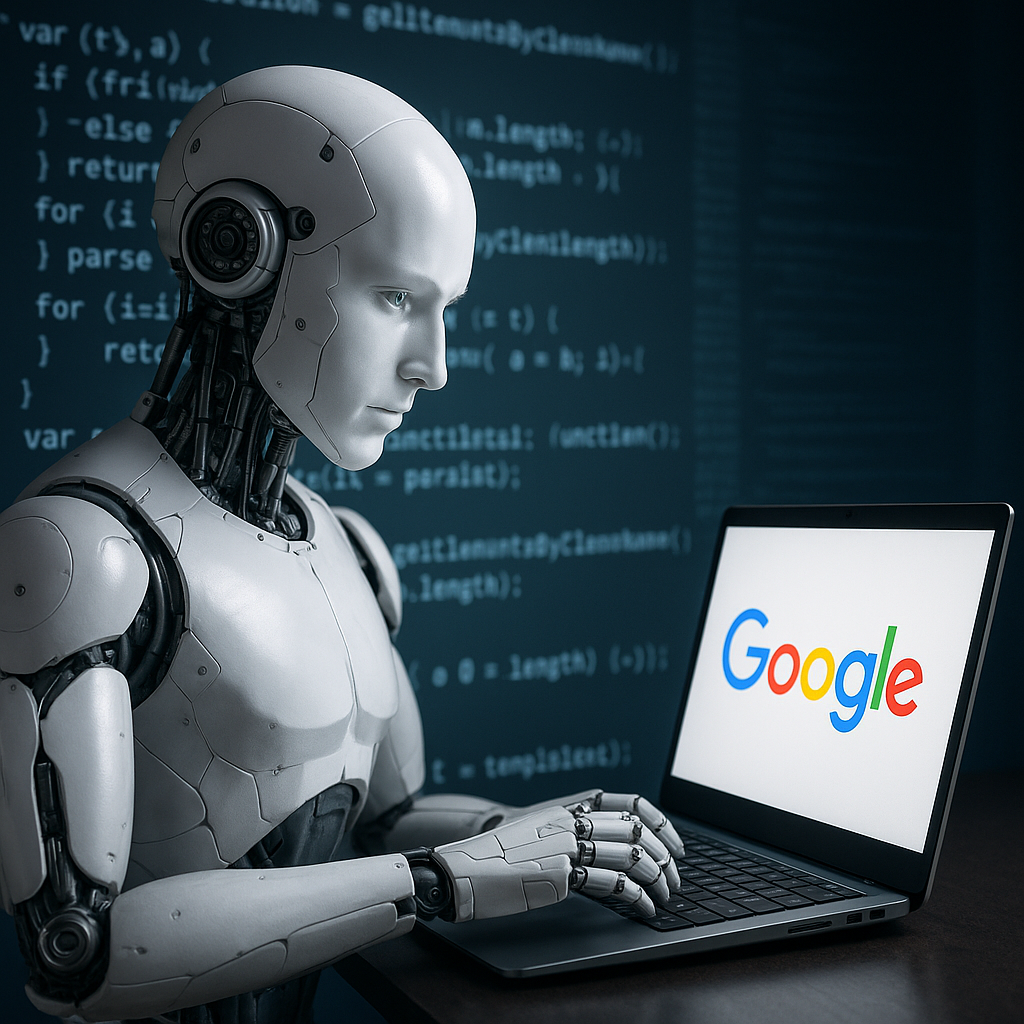
Search engines no longer just index pages: they interpret, prioritize, and anticipate intentions. In this constantly evolving environment, a new generation of software agents stands out. These advanced programs are capable of decoding the internal logic of ranking systems and adapting content accordingly. The result? An increasingly refined interaction between websites and search engine analysis mechanisms.
A new generation of software agents
Unlike traditional scripts, these agents rely on models capable of learning from massive data. They observe positioning variations, analyze signals sent by search engines, and adjust their actions. This continuous adaptation capability is based on predictive analysis of search behaviors, allowing them to anticipate user expectations.
Their role is not limited to technical optimization. They also participate in content structuring, improving semantic relevance, and the overall coherence of a site. In practice, they become intermediaries between content creators and indexing systems.
Why Google is becoming harder to interpret
Successive algorithm updates have made ranking rules more complex. Google no longer relies solely on keywords, but on multiple signals: search intent, editorial quality, user experience, domain authority. Faced with this complexity, it becomes essential to translate these signals into concrete actions.
This is precisely where these advanced systems come in. They do not seek to circumvent the rules, but to understand them deeply in order to better comply with them.
When machines learn to dialogue with engines
One of the most fascinating aspects lies in the ability of these agents to establish a form of exchange with indexing robots. This is not a dialogue in the human sense, but a structured interaction based on interpretable signals. Each modification on a site becomes a response to a detected expectation.
For example, an HTML markup adjustment, an improvement to internal linking, or content rewriting can be interpreted as positive signals. These adjustments are then "read" by Google's bots, which adapt their evaluation of the site.
This logic is at the heart of certain specialized solutions like the evolution of SEO thanks to artificial intelligence, where the goal is to make exchanges between systems more efficient and more relevant.
A continuous learning-based approach
These agents do not follow fixed rules. They constantly evolve through the analysis of the results obtained. Each action generates feedback, which is then used to refine strategies. This process relies on a constant improvement loop, essential for remaining performant in the face of frequent changes in search engines.
This ability to learn continuously allows for the rapid detection of optimization opportunities, but also for the avoidance of inefficient or obsolete practices.
A question about this article?
Contact usThe impact on SEO strategies
The integration of these technologies is profoundly transforming SEO methods. Where once the focus was on one-off optimizations, a global and dynamic approach is now favored.
SEO professionals rely on these tools to:
- Identify the dominant search intents
- Adapt content in real time
- Optimize the technical structure of websites
- Improve the overall relevance of web pages
This transformation allows us to move from a static optimization logic to an evolutionary strategy, which is much better suited to current demands.
To go further in this approach, some platforms offer in-depth analyses, such as AI-assisted SEO audits, which allow for precise identification of areas for improvement.
Bot To Bot: a new way to optimize
An innovative approach consists of making systems interact directly with each other. Rather than limiting themselves to visible optimization, some tools adopt a strategy where software agents communicate directly with search engine robots.
This principle, often called Bot To Bot, is based on a simple idea: adapting the signals sent so that they are immediately interpretable. This speeds up the site's understanding by search engines and improves its ranking more quickly.
In this logic, solutions like BotLink exploit this interaction to refine SEO strategies. The goal is not just to optimize a site, but to create a true synergy between analysis systems and published content.
Concrete benefits for websites
The use of these technologies brings several tangible advantages:
- Better page indexing
- Rapid adaptation to engine updates
- A more precise optimization of content
- A lasting improvement in positioning
These benefits rely on a close reading of the signals sent by the engines, combined with real-time adjustment capabilities.
Towards mutual understanding between systems
What is emerging is an evolution towards a form of shared understanding between websites and search engines. Software agents are no longer content with applying rules: they interpret, test, and adjust constantly.
This dynamic paves the way for more natural referencing, where content quality and relevance become the main drivers. Technical optimizations remain important, but they are now part of a holistic approach centered on user experience.
In this context, tools capable of decoding search engine expectations and responding to them effectively become indispensable. They make it possible to transform complex data into concrete actions, while reducing the uncertainty linked to algorithm changes.
What to remember
The emergence of these advanced agents marks a key step in the evolution of SEO. By learning to interpret search engine logic, they enable the creation of more relevant, more responsive, and more sustainable strategies.
This transformation is not based on simple automation, but on a capacity to understand and anticipate the expectations of indexing systems. An evolution that redefines how websites interact with search engines, and that opens new perspectives for SEO.