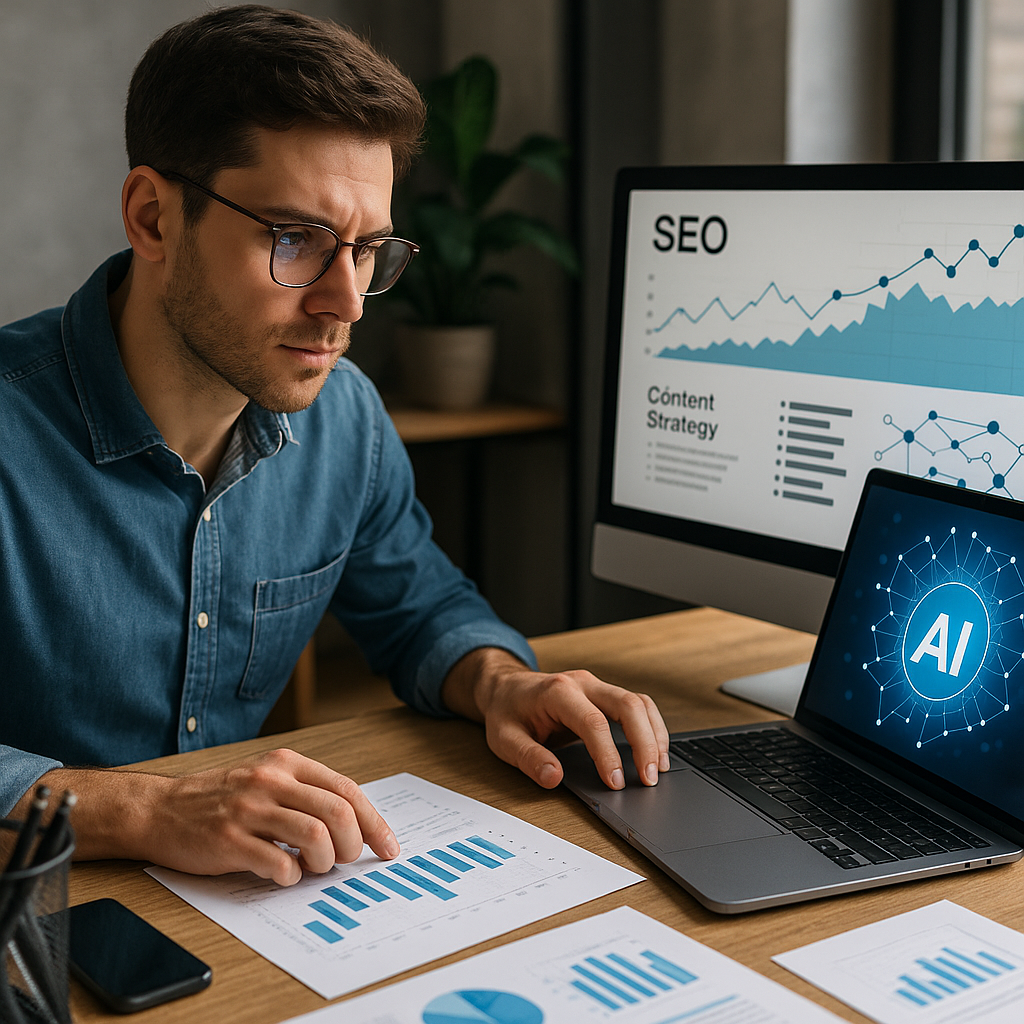
Publishing an article and waiting for results is no longer enough. Search engines are constantly evolving, as are user behaviors. In this changing context, optimization can no longer be static. It must adapt continuously, almost instantly. This is where systems capable of analyzing, adjusting, and improving your pages permanently, without constant human intervention, come into play.
This new approach profoundly transforms the way content is produced and distributed. It relies on tools capable of understanding trends, interpreting search engine signals, and adjusting key site elements in real-time. The result? More responsive visibility that is better aligned with current expectations.
A natural evolution of SEO
SEO has long relied on one-off optimizations: keyword selection, page structuring, link building. But this model is reaching its limits in a constantly changing digital environment. Today, algorithms are evolving rapidly and search intents are continuously changing.
To keep pace, it is essential to adopt a more agile approach. This involves constantly monitoring performance, identifying opportunities, and adjusting content without delay. This adaptability allows us to remain relevant in the face of ever more responsive competition.
Content that continuously adjusts
Unlike static pages, content driven by advanced technologies can evolve according to the data collected. They take into account several parameters: visitor behaviour, key-word positioning, research trends and technical performance.
Thanks to this, pages become scalable. A title can be modified, a paragraph enriched, or a structure revised to better meet user expectations. This ability to evolve rapidly offers a considerable advantage: it allows for maintaining a high level of performance without starting from scratch.
Data-based adjustments
One of the key points of this approach is the continuous analysis of the data. Modern tools are able to detect weak signals and draw specific recommendations. For example:
- Identify a drop in traffic on a specific page
- Identify an emerging keyword opportunity
- Analyze visitor behaviour to improve experience
This information allows for quick and relevant decisions, without waiting for a full audit or a complete overhaul.
Automation for performance
Automation plays a central role in this new way of working. It manages a large volume of data and makes continuous adjustments without permanent human intervention. This does not replace expertise, but amplifies.
By combining analysis and automation, it becomes possible to react instantly to market changes. A page can be optimized as soon as a negative signal is detected, or strengthened as soon as an opportunity arises.
To go further in this logic, some solutions offer particularly effective automated audits, as explained in this article: precise and automated SEO audit. These tools make it possible to quickly detect areas for improvement and act without delay.
A question about this article?
Contact usDirect communication with engines
An innovative approach consists of facilitating exchanges between your site and search engine robots. Rather than simply publishing content and waiting for its indexing, some systems allow for optimizing the understanding of your pages by robots.
This is particularly the case for solutions like BotLink, which are based on a principle of direct communication between automated systems. This method allows for transmitting clear and coherent signals to search engines, thus improving the positioning of web pages.
This more fluid interaction helps to increase the visibility of content, while reducing the timing of indexing and adjustment.
Concrete benefits for businesses
The adoption of a real-time approach offers many advantages. In particular, it improves efficiency, responsiveness and accuracy. Here are some major benefits:
- Continuous improvement of performance
- Reduction of the time needed to optimize the
- Rapid adaptation to new trends
- Better understanding of user expectations
These strengths allow to maximize the ROI of SEO efforts, while limiting unnecessary or obsolete actions.
A change of posture for teams
Adopting this approach also implies changing working methods. Teams must move from planning logic to continuous adjustment logic. This requires flexibility, but also the ability to interpret data.
In this context, the role of SEO experts is evolving. They are becoming more like analysts and strategists, capable of piloting tools and making informed decisions. Humans remain essential, but they rely on powerful technologies to gain efficiency.
To better understand this transformation, you can consult this detailed article: impact of advanced technologies on SEO.
Towards a more agile SEO
SEO is entering a new phase, where speed and adaptability become essential. Traditional approaches give way to more flexible methods, able to adjust in real time.
In this context, performance no longer relies solely on the initial quality of the content, but also on its ability to evolve. Sites that can leverage this dynamic will have a considerable advantage over their competitors.
To adopt this logic is to accept that SEO is no longer a one-time project, but a continuous process. It also recognizes that modern tools offer unprecedented opportunities to improve visibility.
By integrating these new practices, you can transform your online presence management and achieve a level of performance difficult to match with traditional methods.